
a street art movement, the power of colour, and an artist who turned a symbol of division into something hopeful.
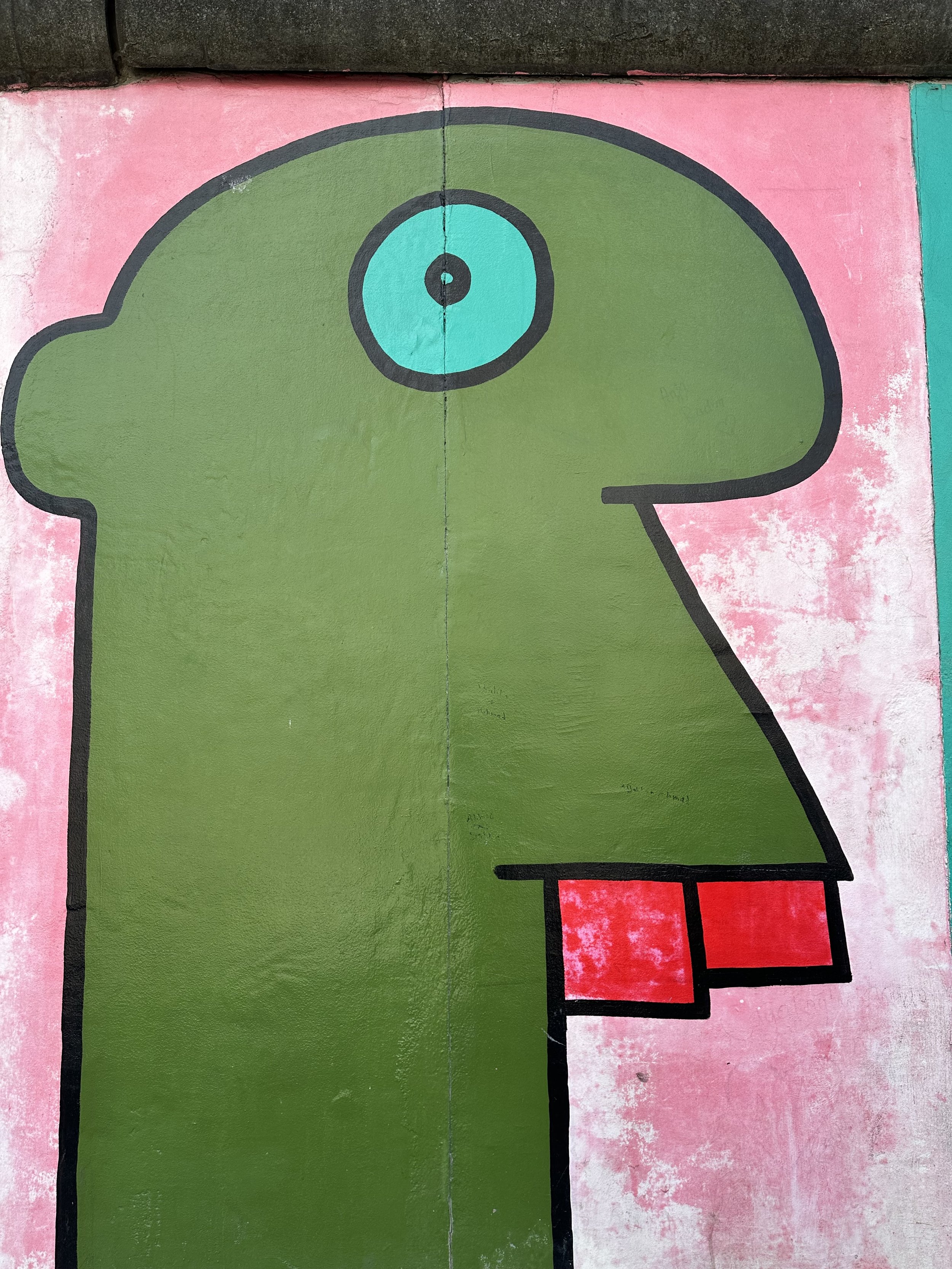
thierry noir, berlin wall, 2023
i've been to berlin a few times, and it's a fantastic city.
i love the history, the architecture, the food, the clubs and bars. it’s gleaming buildings against a backdrop of gritty industrialism.
and i love the art scene.
and as a central part to that, the berlin wall, and in particular, the paintings by thierry noir.
i'm fortunate enough to own a few of his paintings, and i have a small canvas head available at luck contemporary, but my interest in noir isn't just about collecting his work. it's about what he did, where he did it, and what those paintings came to represent.
colour in bleak times
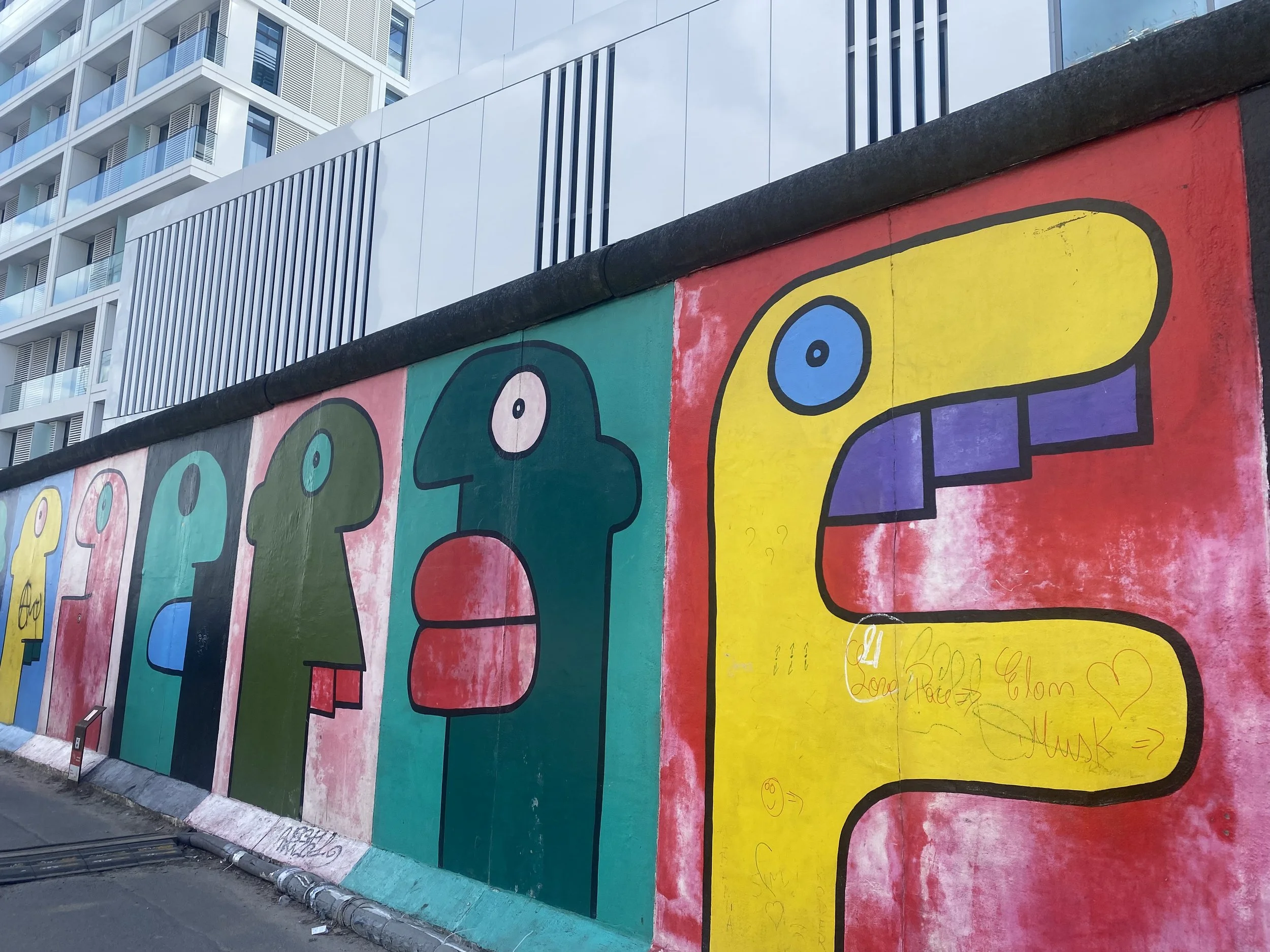
thierry noir, berlin wall, 2023
the berlin wall was built in 1961 to divide east and west berlin. it split families, friends and a city, becoming one of the most powerful (and disturbing) symbols of the cold war.
the wall itself was bleak, grey and cold.
and then, in 1984, enter thierry noir, a french artist living in berlin, who began painting the wall with colourful, cartoon-like heads. a striking contrast to the grey concrete. bold colours, exaggerated features, wonderfully simple shapes. nothing particularly complicated, but instantly recognisable.
the wall designed to divide people had become a canvas for creativity and expression.
noir, with his paints (he collected leftover paint found in west berlin) was able to challenge what the wall represented. he could make people look at it differently. and they did.
a bit of defiance goes a long way
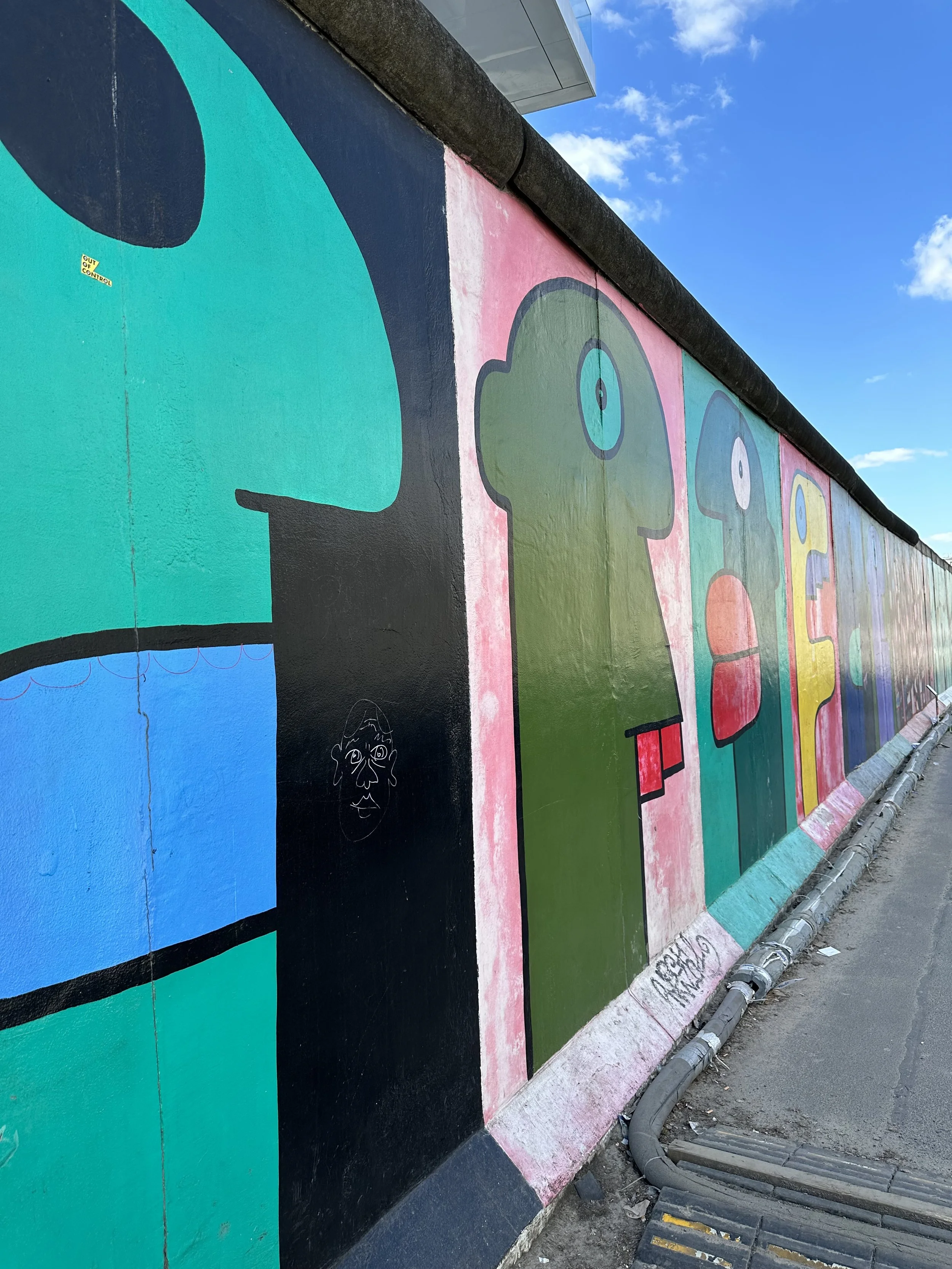
thierry noir, berlin wall, 2023
to me, what’s most special about thierry noir beyond the imagery (which i love), is that his paintings weren't simply decorative.
painting the wall was an act of defiance. he was making art on a structure that represented oppression and restriction, and doing it without permission. he was reclaiming a little bit of public space, using colour and humour rather than slogans or speeches.
i like that.
there's a kind of optimism in his work, but it isn't sentimental. the circumstances were serious, and the wall was a very real symbol of a divided world. the paintings didn't make that history disappear but what they did, was offer a different response to it.
i suppose that's one of the things i find so appealing about art generally. it doesn't always have to shout to make a point. sometimes a simple image, in the right place, can say rather a lot.
and sometimes, when everything around you feels bleak, a bit of colour is exactly what's needed.
the godfather of street art?
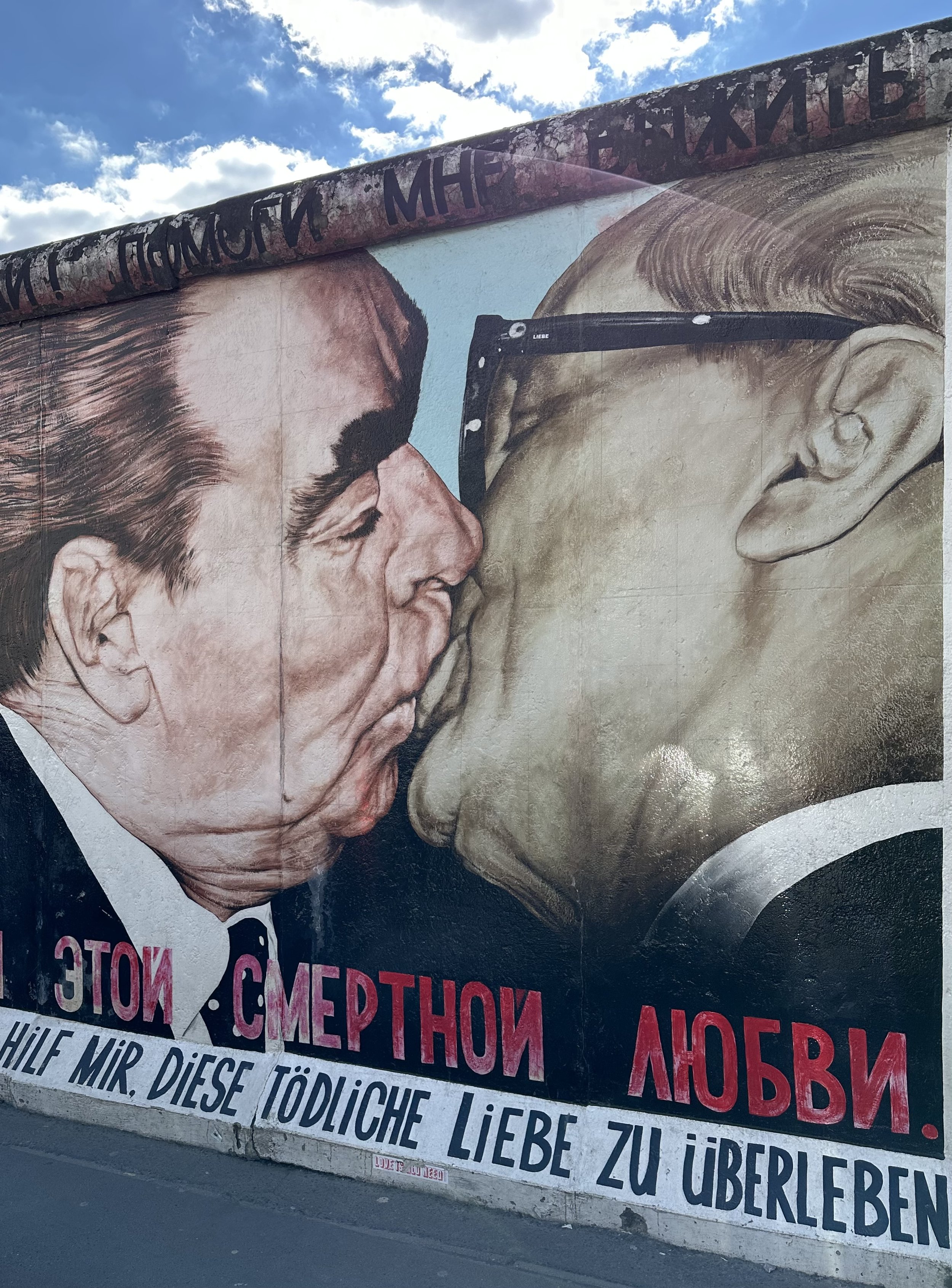
east side gallery, berlin, 2023
i've seen noir described as one of the founding fathers of european street art, and why not?
he was painting the wall long before street art became the global phenomenon it is today, before artists such as banksy became household names and before galleries and auction houses fully embraced work that had started life on the street (basquiat, haring, jr and invader to namecheck a few) .
his paintings helped inspire other artists to paint the wall, which eventually became the east side gallery, one of berlin's best-known landmarks.
it's tempting to look at street art today and think of it as a relatively recent phenomenon. but artists have been using public spaces to communicate, provoke and challenge authority for decades.
noir helped demonstrate what street art could do. he took art outside the gallery, put it in front of people who might never have visited one, and used a very distinctive visual language to transform the meaning of a place.
that's a pretty significant contribution in my book.
a wall comes down, but the art stays
the berlin wall fell in 1989, and the world changed.
well, parts of it did. the end of the wall was a defining moment in modern european history, and the paintings that had appeared on its western side became part of the story.
i find that quite moving.
a structure built to keep people apart has now become somewhere people come together. a symbol of division has become a place associated with freedom, creativity and peace.
there's an irony here, too. much of street art is temporary by nature. it can be painted over, removed or simply disappear. but the work on the berlin wall has become part of the historical record. the paintings have outlived the structure's original purpose, and their meaning has changed with time.
why i collect thierry noir
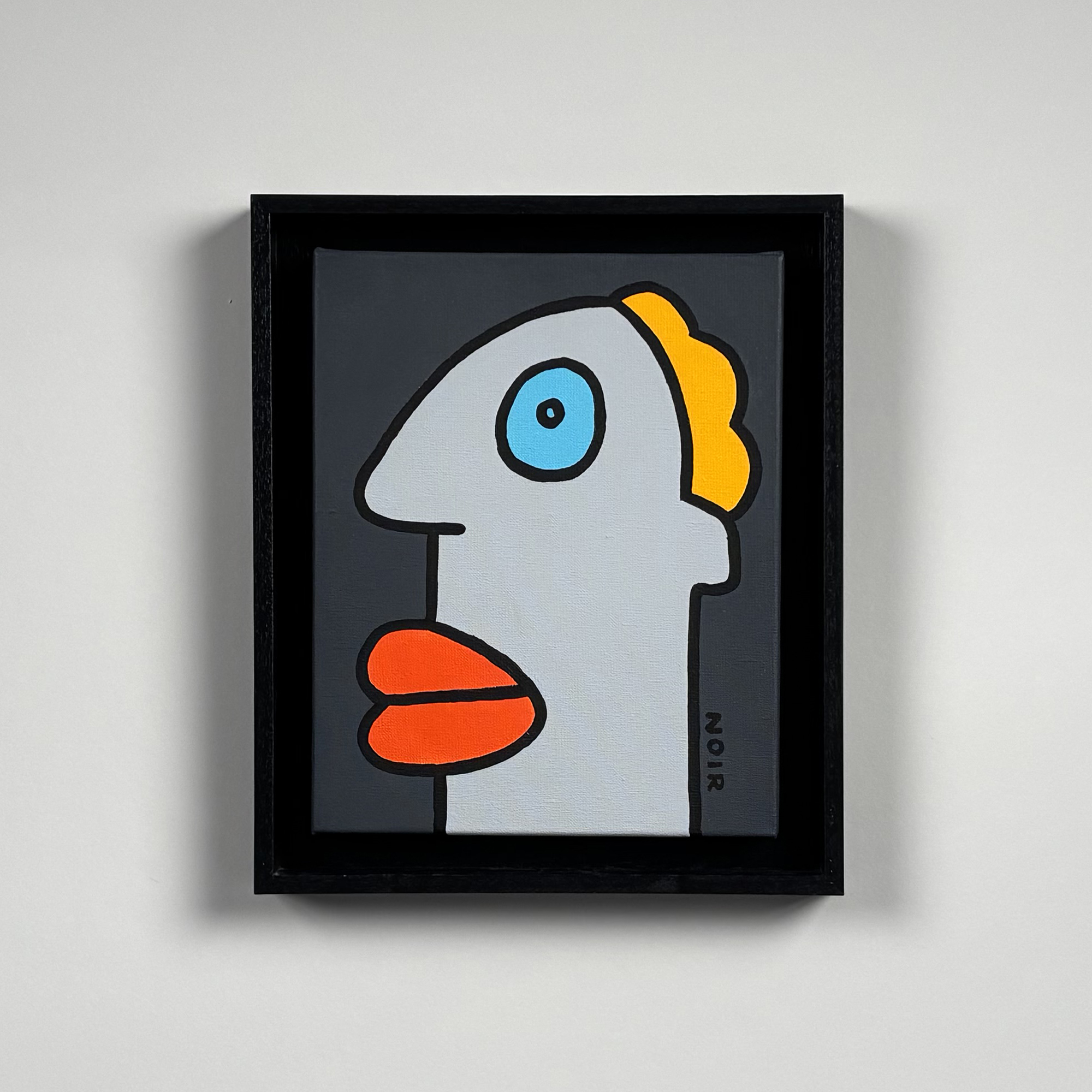
Thierry noir, the discussion will be long, 2020
i should probably say something about the work itself, rather than just the history.
i love the colour. i love the simplicity. and i love the fact that his paintings are instantly recognisable without feeling overworked.
but knowing the story adds something.
when i look at a noir painting, i don't just see an amusing, colourful image. i think about berlin, the wall and the circumstances in which he began painting it. i think about the idea of using art to challenge something that seemed immovable. and i think about the contrast between the bleakness of the wall and the colour he brought to it.
that's what makes the work interesting to me. it can be playful and visually appealing, but it also carries a history and a sense of purpose.
i've collected art for more than 25 years, and i've learnt that the works you enjoy living with aren't necessarily the ones you need to spend hours trying to understand. sometimes it's the combination of a great image, an interesting story and something that makes you feel a little differently about the world.
noir ticks those boxes for me.
discover thierry noir at luck contemporary
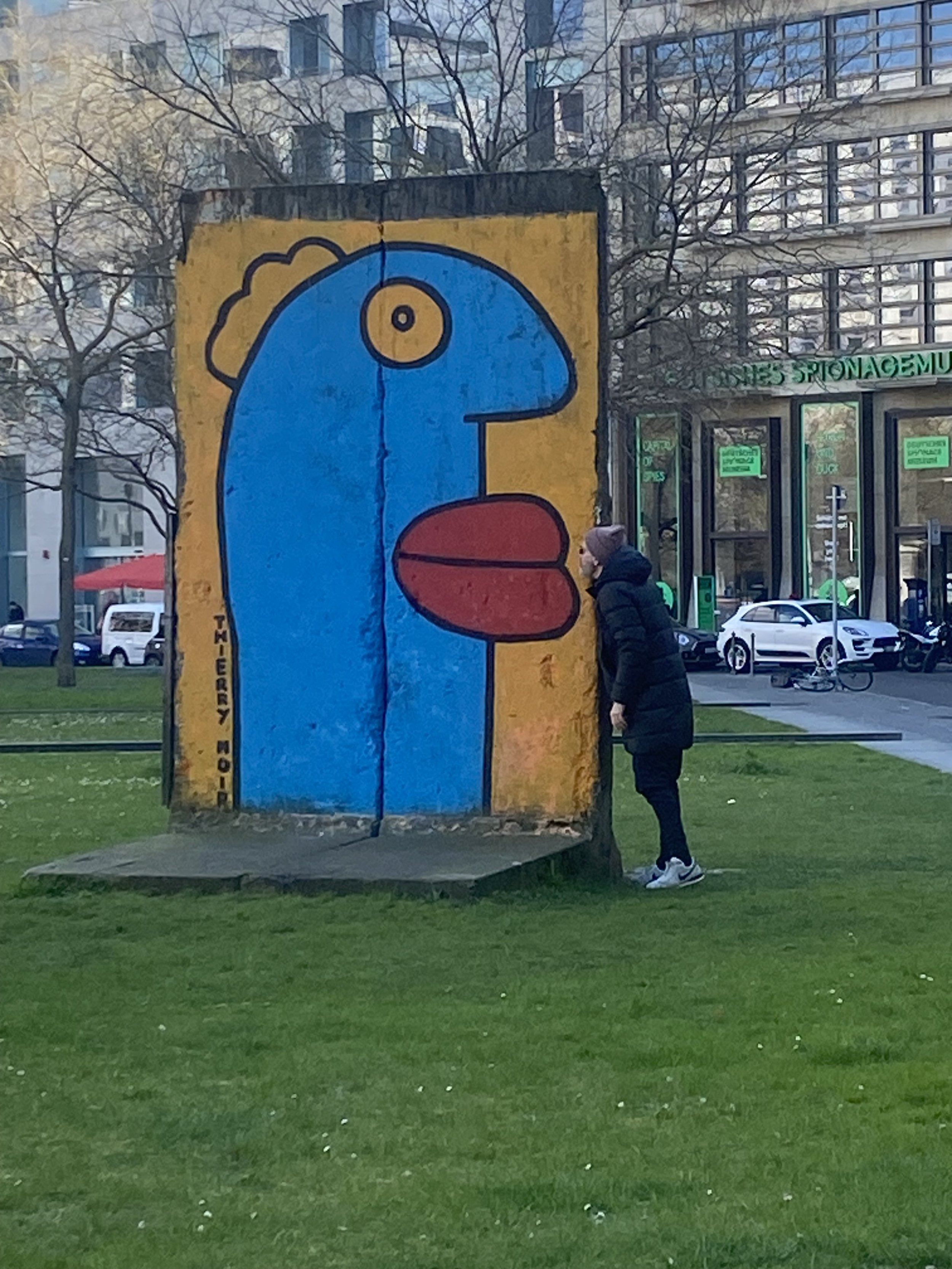
me and thierry, berlin, 2023
i have a small thierry noir head canvas available at luck contemporary.
if you know his work already, you'll understand the appeal. if you're discovering him for the first time, i'd encourage you to look beyond the colourful heads and spend a little time with the story behind them.
because the berlin wall wasn't just a canvas. it was a symbol of division, and noir helped turn it into something else.
for me, that's what makes his work endure. colour in bleak times, defiance in the face of authority, and a reminder of the importance of freedom and peace.